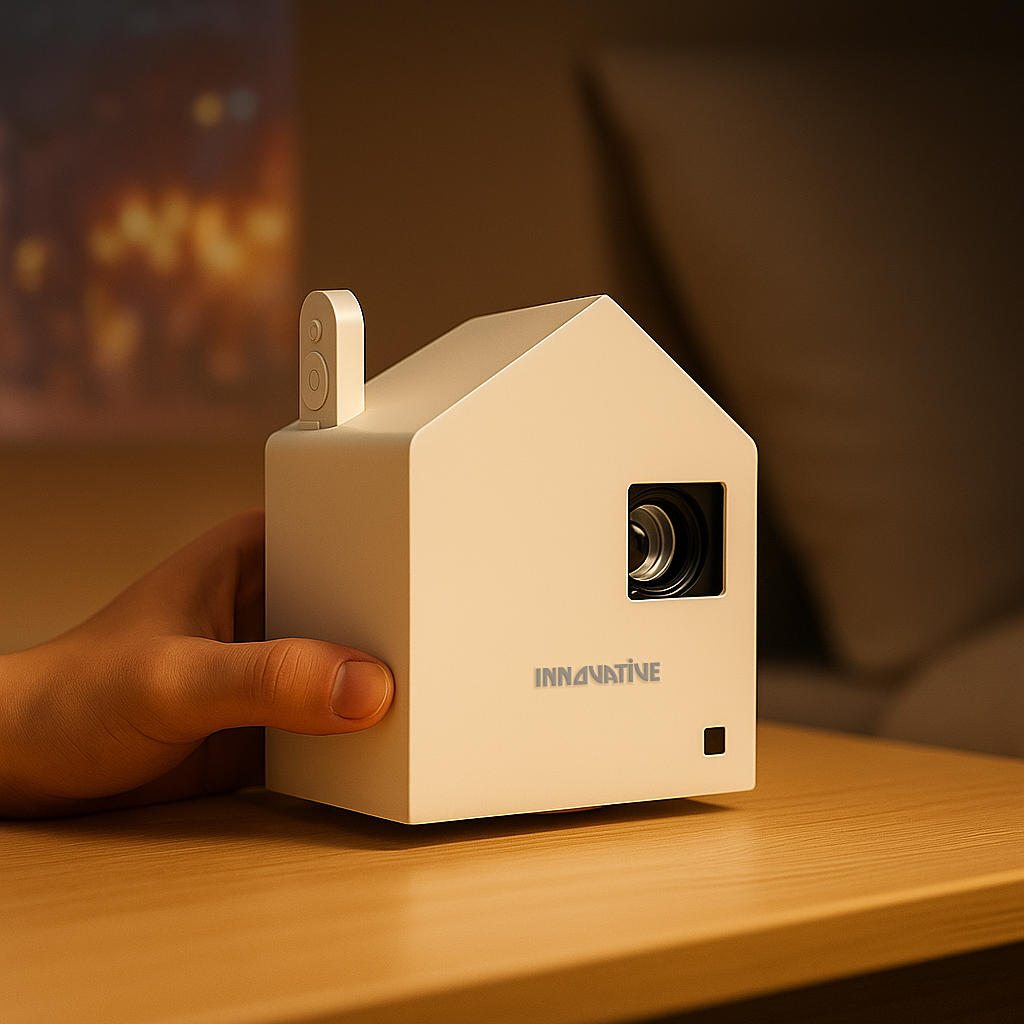

A giant TV sounds great until you try getting it up a narrow stairwell, mounting it on a rental wall, or living with a black rectangle dominating the room. That is exactly why so many apartment buyers start looking at an ultra short throw projector for small apartment setups. Put it close to the wall, keep the floor plan intact, and get a much larger image without rearranging your life around a screen.
But this category gets oversold fast. UST projectors look simple in product photos, yet small apartments expose every weak point - bad black levels, overstated brightness, poor screen pairing, fan noise, awkward furniture height, and speakers that sound thin in a compact room. If you want a setup that actually feels easy to live with, the right choice is less about chasing the biggest spec sheet and more about matching the projector to your room, your light, and your daily habits.
What makes an ultra short throw projector for small apartment living different?
A regular projector usually needs several feet, sometimes across the whole room, to create a large image. A UST projector sits inches from the wall or screen. That changes everything in a small apartment.
First, you do not need ceiling mounting or a long cable run across the room. Second, you are less likely to have people walking through the beam. Third, the projector can live on a media console where a TV might normally sit. For renters, that matters. For anyone sharing a living room, bedroom, or studio layout, it matters even more.
There is also a comfort factor. A well-matched UST setup can feel cleaner and less invasive than a giant television. When it is off, the room still looks like a room. When it is on, you get a genuinely cinematic image.
The trade-off is precision. UST models are less forgiving about placement. A few millimeters can affect geometry. Console height, wall flatness, and screen alignment matter more than people expect.
The biggest myth: brightness numbers tell you everything
This is where buyers get burned. Marketplace listings love inflated lumen claims, and cheap projectors often look impressive on paper while collapsing in real use. In an apartment, real brightness matters because you are not always watching in a blacked-out theater. You may have window light, lamps, or daytime viewing in a multi-use room.
That does not mean you should chase the highest number blindly. A projector with aggressive brightness claims but weak color, poor contrast, and low image stability can look worse than a lower-rated model with honest performance. Real-world image quality is the point, not marketing math.
For small apartment viewing, think in terms of your habits. If most watching happens at night, you can prioritize contrast, color accuracy, and quieter operation. If you want sports or casual streaming during the day, brightness and screen pairing move up the list quickly.
Screen choice matters more than most buyers expect
A lot of people assume they can point a UST projector at any white wall and call it a day. Technically, yes. Practically, that is where many apartment setups start to disappoint.
UST projectors benefit heavily from the right screen, especially in rooms with ambient light. An ALR screen designed for ultra short throw projection helps reject overhead and side light while preserving perceived contrast. In a small apartment living room, that can be the difference between a washed-out picture and one that still has depth.
If your apartment is mostly night viewing and you have a smooth, neutral wall, you can get started without a dedicated screen. But if you care about getting the best from the projector, or you want daytime use to feel worthwhile, the screen is not an accessory after the fact. It is part of the system.
That is also why furniture and mounting choices matter. The projector, screen, and console height all need to work together. Buying one piece at a time without considering the rest usually creates frustration.
The right image size for a small apartment is not always the biggest one
This is another common mistake. Buyers hear that a projector can do 120 inches and assume they should use all 120. In a small apartment, bigger is not automatically better.
A huge image in a tight room can feel overwhelming, especially if seating distance is short. It can also expose weaker source quality, softer focus at the edges, and more ambient light problems. For many apartments, the sweet spot is often around 90 to 100 inches, sometimes 110 if the room supports it.
That range usually gives you the big-screen effect without turning casual watching into a front-row experience. It also makes brightness go further and can simplify placement on a low console.
Sound and fan noise matter more in small spaces
Projector marketing often treats audio like a side note. In an apartment, it is not. You are working in a compact room with shared walls, lower listening distances, and fewer places to hide weak sound.
Some UST projectors have surprisingly solid built-in audio and can carry a bedroom or small living room on their own. Others sound thin, boxy, or loud enough in fan noise that quiet scenes lose their impact. If you are trying to keep the setup minimal, this is worth paying attention to.
A projector that looks great but needs an immediate soundbar upgrade may still be a good choice, but it is not the same as a simple plug-and-play system. Be honest about what you want. If your goal is low-clutter living, better onboard sound can be worth paying for.
Smart features are useful, but they should not be the reason you buy
Built-in streaming, wireless audio, and mobile casting all sound convenient. Sometimes they are. Sometimes they are also the first things to feel outdated.
The core buying decision should still be image quality, placement fit, and day-to-day usability. Smart features are helpful if they work reliably, but they should support the projector, not distract from a weak foundation. It is usually better to have a great projector with a simple external streaming device than a mediocre projector with a flashy home screen.
For apartment users, reliability matters. You want something that turns on quickly, reconnects without drama, and does not require constant troubleshooting just to watch a show after work.
Placement can make or break the whole setup
UST projectors are sold as easy, and compared with long-throw models, they are easier. But they still need careful setup.
The console must be the right depth and height. The wall or screen should be flat. The projector should sit stable, not on a soft cabinet top or uneven surface. Keystone correction can help, but relying on heavy digital correction is not ideal if you care about image fidelity.
In apartments, people often work with furniture they already own. That is reasonable, but it is also where disappointment starts. If your media console is too tall or too shallow, the projector may not hit the image size you expected. A little planning here saves a lot of irritation later.
So what should you prioritize first?
If you are choosing an ultra short throw projector for small apartment use, start with room conditions, not brand hype. Ask how much light you have, how large an image you realistically want, and whether this is mainly for movies, mixed casual viewing, or family all-day use.
From there, prioritize honest brightness, good contrast, screen compatibility, and practical setup dimensions. Then look at audio, smart features, and design. That order matters. A sleek projector with a polished interface is still the wrong product if it cannot handle your room.
It also helps to avoid the cheapest end of the market. Budget projectors often promise impossible performance and deliver soft focus, weak brightness, and poor longevity. Small apartments do not hide those flaws. They magnify them.
If you want a system that feels simple instead of fussy, buying from a specialist that tests for real viewing conditions matters. Brands like INNOVATIVE Projectors focus on use-case fit instead of spec-sheet theater, which is exactly what apartment buyers need.
When a UST projector is the wrong choice
A UST projector is not automatically the best answer for every small space. If you mostly watch in bright daylight and do not want to invest in a proper ALR screen, a TV may still be the more practical tool. If your furniture cannot support precise placement, or your wall situation is awkward, setup can become more work than expected.
And if you move constantly, a portable standard-throw projector might suit your lifestyle better than a near-wall installation. UST is excellent for the right apartment, but it is still a category with demands.
The upside is that when it fits, it fits beautifully. You get a large image without surrendering your room to a giant panel, and you keep the setup cleaner than most people think possible. The smartest apartment setups are not built around the biggest promise on the box. They are built around what you will actually enjoy using every night.