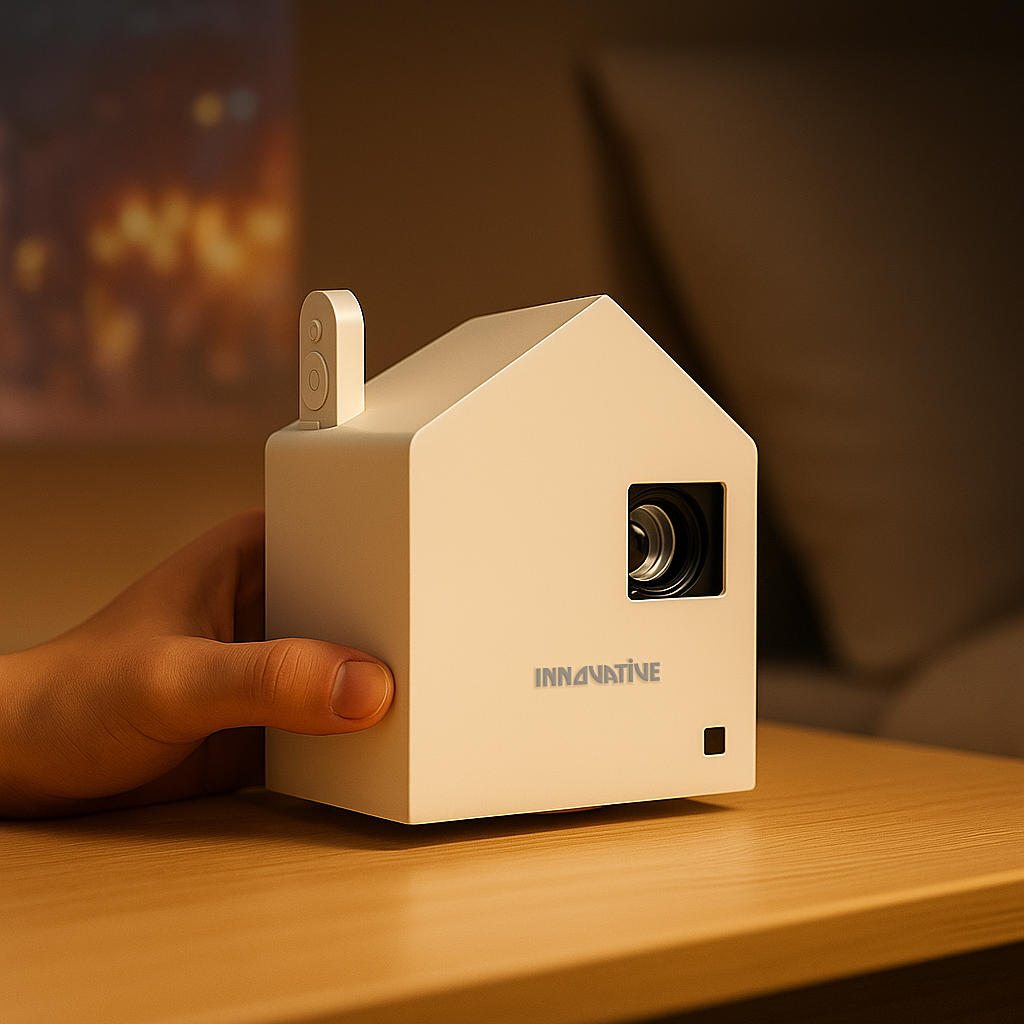

Most people shopping for a bedroom ceiling projector picture the fun part first - lying flat, lights low, movie on, no TV dominating the room. Then they buy the wrong projector and find out the hard part: ceiling projection is less about headline specs and more about placement, angle, brightness, and whether the image still looks clean when the projector is pointed somewhere unusual.
That is why the best projector for bedroom ceiling projection is not automatically the brightest one, the cheapest one, or the one with the biggest number on the box. Bedroom use is its own category. You need a projector that works well in a dim, close-range space, handles awkward mounting or tilting, and does not turn nightly viewing into a setup chore.
What actually makes a projector good for ceiling use
Ceiling projection sounds simple, but the use case creates a few specific demands. In a bedroom, the projector is usually sitting on a nightstand, shelf, bed tray, or low table, and it often has to angle sharply upward. That angle can introduce distortion, soft focus at the edges, and brightness loss if the projector relies too heavily on digital correction.
A good bedroom projector starts with flexibility. You want a unit that can physically aim upward without needing a pile of books under it. A built-in adjustable stand or a compact body that pairs easily with a mount matters more here than in a living room setup.
Focus is the next filter. Many low-end projectors look acceptable when thrown straight at a wall, but once you tilt them toward a ceiling, weak optics get exposed fast. Text smears, corners blur, and the image loses that clean, relaxed look you want for late-night watching. For bedroom viewing, image quality at practical angles matters more than inflated marketing claims.
Then there is sound. If the projector is near your pillow, noisy cooling fans become impossible to ignore. A projector for ceiling viewing should feel calm in a quiet room. That does not mean silent, but it should not sound like a desktop tower trying to cool itself through a movie.
The best projector for bedroom ceiling projection depends on your room
There is no honest one-size-fits-all answer, because bedroom setups vary more than people expect. A studio apartment with white ceilings and no mounting options is different from a master bedroom with a dark ceiling, blackout curtains, and a shelf across the room.
If your bedroom is small, a portable projector with easy angle adjustment is often the better choice. You do not need huge output if you are projecting a modest image in a dark room. In fact, too much brightness in a close, dark space can feel harsh. This is one of the biggest myths in projector shopping - brighter is not always better. In bedrooms, balanced brightness and good image control usually beat brute-force output.
If you want a larger ceiling image from farther away, then brightness and lens quality matter more. The farther the throw, the more careful you need to be about maintaining a sharp, even picture across the whole ceiling. This is where better-built models separate themselves from novelty projectors.
If you plan to move the projector between rooms, battery capability and wireless streaming support become genuinely useful. No cables, no limits is not just a slogan in this category. It changes whether you actually use the projector regularly or leave it in a drawer after the first week.
How to choose the best projector for bedroom ceiling projection
Start with placement, not specs. Before you compare models, decide where the projector will sit. Nightstand, headboard shelf, tripod, and ceiling mount all create different demands. If the projector must point sharply upward from beside the bed, look for strong keystone correction and autofocus, but understand the trade-off: digital correction is convenient, yet too much of it can reduce image fidelity.
That is why physical adjustability is better than depending on software alone. A projector with a built-in gimbal-style stand or reliable tilt mechanism gives you more usable image quality because it lets the lens aim naturally instead of forcing the picture into shape digitally.
Next, think about your ceiling itself. White, smooth, matte ceilings are the easiest surface. Textured ceilings can soften details and make bright scenes look uneven. Dark paint may look stylish, but it absorbs light and demands more projector performance. If your ceiling is not projector-friendly, a wall may still give you the better experience, even if ceiling viewing is the original plan.
Streaming is another decision point. For bedroom use, built-in smart features are helpful only if they are fast and stable. A clunky interface ruins the simplicity people want from a casual nightly projector. Wireless casting can also be useful, but it should be truly practical, not a feature that works only under perfect conditions.
Finally, be realistic about audio. Built-in speakers are fine for solo viewing in a quiet room, but if you care about richer sound, make sure Bluetooth audio pairing or simple speaker output is easy. Convenience matters more in bedrooms because every extra cable makes the setup feel less worth it.
Specs that matter, and specs that get abused
The projector market is full of bad shortcuts. Bedroom buyers get hit especially hard because this category attracts cheap gadgets with big promises and weak real-world performance.
Brightness is the biggest trap. Many brands advertise huge lumen numbers that do not reflect usable, accurate image brightness in actual viewing conditions. For a bedroom projector, you do not need the highest number on the page. You need enough real brightness for your image size, plus decent contrast and color so movies do not look washed out. A lower but honest brightness rating from a tested projector is worth more than a fantasy number from a no-name listing.
Resolution also needs context. Native resolution matters more than support claims. Plenty of products claim 4K support even when the projector itself is not producing a truly detailed image. In a bedroom, where people often watch from relatively close distance, soft detail becomes obvious. Clean 1080p from a quality projector is often a better result than fake-premium marketing around a weaker product.
Auto keystone and autofocus are useful, but they should not be treated like magic. They solve convenience problems, not optical limitations. If a projector has poor lens quality, software correction will not turn it into a great ceiling projector.
Battery power is a real lifestyle feature if you want occasional grab-and-go use, but it does come with limits. Battery-capable projectors may reduce brightness to preserve runtime. For bedroom movie nights, that can be perfectly fine. For larger images or brighter ambient conditions, plugged-in operation may still be better.
Common mistakes bedroom buyers make
The first mistake is buying a projector designed for conference rooms or bright-room sales demos and forcing it into a bedroom role. That can leave you with excess fan noise, awkward placement, and an image that feels aggressive instead of comfortable.
The second is going too cheap. Bedroom projection has become a magnet for novelty products that look impressive in edited videos and disappointing in real use. They often rely on inflated brightness claims, poor optics, and weak quality control. Parents should be especially careful here. A bad projector does not create a relaxing viewing experience for kids if the image is dim, blurry, or flickery.
The third mistake is ignoring setup friction. If it takes ten minutes to angle, focus, connect, and correct the image every night, you will stop using it. The best bedroom projector is the one that gets used, not the one that wins a spec comparison on paper.
What a smart bedroom setup looks like
For most people, the sweet spot is a compact, real-world-tested projector with straightforward angle adjustment, solid native 1080p performance, dependable autofocus, and enough honest brightness for a dark room. Add wireless streaming or easy HDMI input, keep fan noise reasonable, and make sure the projector can handle off-axis placement without turning the image into a geometry project.
If you want a cleaner permanent setup, a simple mount can make ceiling projection much more consistent. If you want flexibility, a portable model with battery support and built-in streaming can fit modern life better. Neither choice is automatically better. It depends on whether your bedroom projector is replacing a TV, complementing one, or serving as a casual second screen.
At INNOVATIVE Projectors, this is exactly why real-world category shopping matters more than spec-sheet shopping. Bedroom cinema is not the same as bright-room viewing, office presentations, or premium living room installs, and trying to shop them all by one set of numbers usually leads to the wrong purchase.
A bedroom ceiling projector should feel easy, not technical. If the image looks clean, the setup feels natural, and you actually look forward to using it at the end of the day, you picked the right one.