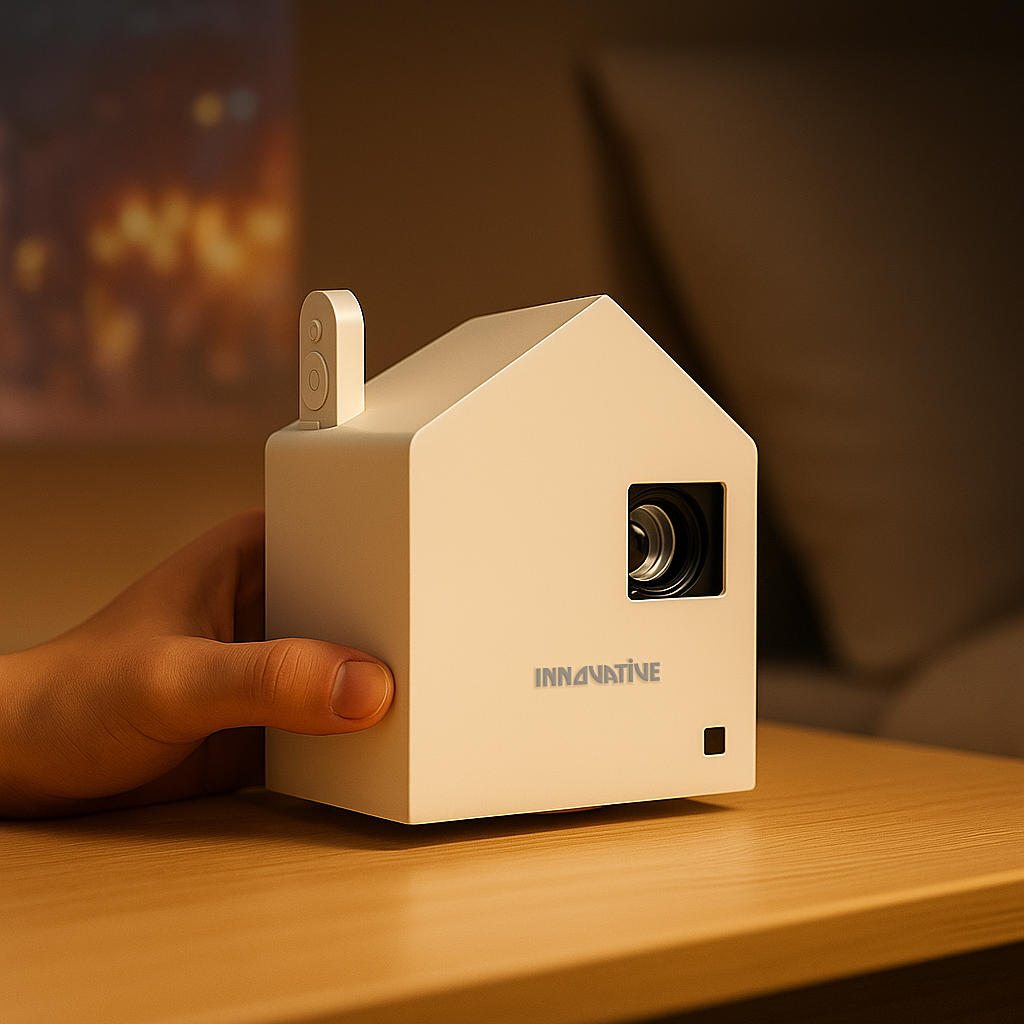

You set up a projector for a Sunday game, a classroom lesson, or a movie with the kids, pull the blinds halfway open, and suddenly the image looks weak. That is why people keep asking, can a projector work in daylight? The honest answer is yes - but not every projector, not in every room, and not with every screen.
This is where bad buying advice causes expensive mistakes. A lot of projectors are marketed as "daylight capable" simply because the box lists a big lumen number. In real use, daylight performance depends on the whole setup: true brightness, image size, screen material, room layout, and what you are trying to watch. A cartoon, a spreadsheet, and a dark movie scene do not place the same demands on a projector.
Can a projector work in daylight, really?
Yes, a projector can work in daylight, but "work" needs a clear definition. If you mean a visible image in a room with some natural light, many good projectors can do that. If you mean a vivid, high-contrast, TV-like picture in a sun-flooded room with no light control at all, that is a much higher bar.
Daylight does not just make an image dimmer. It also crushes contrast. Blacks turn gray, colors lose punch, and shadow detail disappears first. That is why some people say their projector is bright enough during the day, while others with a similar-looking setup say it is unusable. They may be projecting different image sizes, onto different surfaces, with very different ambient light levels.
A bright conference room presentation can still look fine in daylight because slides usually have white backgrounds, large shapes, and high-contrast text. A moody movie with lots of dark scenes is far less forgiving. Sports and casual TV often sit in the middle. They can look very good in a bright room if the projector and screen are chosen properly.
What matters most for daylight projector performance
Brightness is the first factor, but it is not the only one. Real brightness matters more than inflated marketing claims. This is one of the biggest traps in the projector market. Cheap models often advertise numbers that do not reflect real, usable on-screen performance. In practice, the image may look nowhere near bright enough once you move beyond a tiny screen in a dark room.
Image size matters just as much. The larger you make the picture, the more that available light is spread out. A projector that looks solid at 80 inches in daytime may look washed out at 120 inches in the same room. This is why broad claims like "works in daylight" are incomplete without talking about screen size.
Screen choice can make a dramatic difference. A plain white wall reflects both the projector light and the room light, which makes daytime viewing harder. A proper screen gives you a more controlled surface. In bright rooms, an ALR screen - ambient light rejecting screen - can help preserve contrast by reducing the impact of off-axis room light. It will not perform miracles in direct sun, but it can move a setup from disappointing to genuinely enjoyable.
Placement matters too. Windows behind the screen are usually the worst case because they dump light exactly where you need darkness most. If the room has daylight coming from the side, you have a better chance. Near-wall and ultra short throw setups can also help in some spaces because they pair well with screens designed specifically for bright-room viewing.
The myth that more lumens solves everything
A brighter projector generally performs better in daylight, but brightness alone does not guarantee a better image. Push brightness too far without good color performance or contrast handling and the result can look harsh, flat, or strangely inaccurate. For home viewing, that trade-off matters.
This is why real-world testing matters more than spec-sheet bragging. The right projector for daytime sports in a living room may not be the same projector you would choose for movie nights in a dark bedroom. One setup prioritizes brightness and ambient light control. The other may favor black levels, quieter operation, or a more cinematic image.
There is also a point where buyers start trying to compensate for a bad environment with raw output. If direct sunlight is hitting the screen, even a very bright projector will struggle. Projectors work with reflected light. TVs emit light directly. That physical difference is the reason daylight performance always depends on the room more than people expect.
Best use cases for a projector in daylight
Some activities are naturally well suited to daytime projection. Sports is one of the best examples because the content is bright, fast, and usually watched in a social setting where absolute black level is not the priority. News, talk shows, YouTube, classroom content, and many business presentations also hold up well.
For office use, text clarity becomes critical. Brightness helps, but so does optical sharpness and proper resolution. A projector that looks acceptable with video can still be frustrating for spreadsheets if text edges are soft. This is why business and education buyers should evaluate daylight performance with actual presentation content, not just demo videos.
Movies are the toughest test in daylight, especially films with lots of night scenes or subtle color grading. Families often want a flexible setup that works for cartoons during the day and movies later at night. That is a smart use case, but it usually means choosing a projector that performs well in ambient light and accepting that the best cinematic experience still happens after dark or with the room dimmed.
How to make a projector work better in daylight
If you want the biggest improvement, control the room before upgrading the projector. Curtains, shades, and simple positioning changes can have an outsized impact. You do not need total blackout for daytime success, but reducing direct and screen-facing light matters a lot.
Next, be realistic about screen size. Many people chase the largest image possible, then blame the projector when daytime performance falls apart. A slightly smaller image often looks dramatically better because brightness and perceived contrast improve together.
Then look at the screen itself. A bright-room screen is often the missing piece in living rooms, offices, and multipurpose spaces. This is especially true if you want a projector to replace casual daytime TV use rather than serve as a night-only entertainment device.
Finally, match the projector to the job. Portable battery-powered models are great for flexibility, but not all portable projectors are built for the same lighting conditions. Some are ideal for shaded spaces and evening use. Others are designed with enough real output to handle daytime viewing more confidently. The right answer depends on whether you are moving room to room, setting up in a meeting space, or building a more permanent living room system.
Should you buy a projector for daytime viewing?
If your goal is a huge image with flexibility, less eye strain than staring at a bright TV all day, and a cleaner room setup without turning your wall into a giant black rectangle, a projector can be a very smart choice. But you need to buy based on your room and your habits, not on inflated promises.
For apartments, family rooms, and multipurpose living spaces, the best projector is usually not the cheapest one with the most aggressive brightness claim. It is the one that delivers tested, usable brightness, good color, reliable focus, and a setup path that includes the right screen and placement. That is the difference between a projector that technically turns on in daylight and one you actually enjoy using.
At INNOVATIVE Projectors, this is exactly why we push back on gimmicky specs and one-size-fits-all advice. Daytime viewing is possible. It just needs honest expectations and equipment chosen for the real room, not the fantasy room from a product listing.
So can a projector work in daylight? Absolutely. Just do not judge the answer by a marketing number alone. Judge it by what you want to watch, how bright your room really is, and whether the full setup is built for daylight instead of merely advertised for it.
The best daytime projector setup is the one that feels easy once it is in your home or workplace - bright enough to use, clear enough to trust, and honest enough to keep you from buying twice.