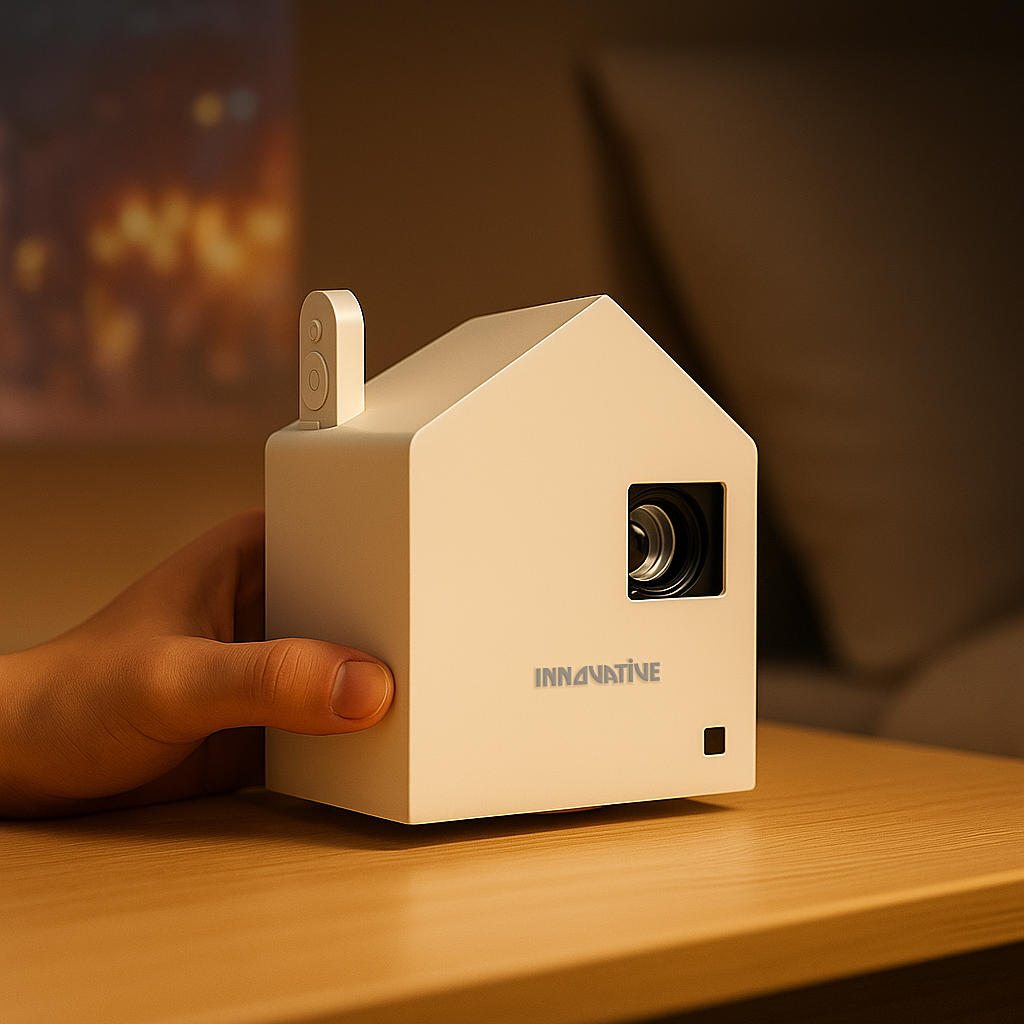

Renters usually get stuck between two bad options: a tiny TV that fits the room, or a big-screen dream that sounds like it requires drilling holes, running cables through walls, and risking your security deposit. The good news is that a projector setup for rented apartments can be simple, clean, and genuinely practical - if you build around the room you actually have, not the fantasy room from a showroom photo.
That matters because apartment projection has different rules. You are dealing with limited wall space, neighbors, ambient light, furniture you may need to move, and lease restrictions that make permanent installation a bad idea. The best setup is rarely the one with the most aggressive spec sheet. It is the one that gives you a large, watchable image with minimal hassle and zero landlord drama.
What makes projector setup for rented apartments different
In a house, you can plan around the projector. In an apartment, the projector has to adapt to the room. That shifts the priority list fast.
Mounting flexibility matters more than a hardwired ceiling install. Real brightness matters more than inflated marketing claims because apartment living rooms often have windows you cannot fully black out. Throw distance matters because many renters do not have the luxury of placing a projector 10 or 12 feet back. And noise matters, both from the projector itself and from the audio system, because shared walls are real.
This is where a lot of cheap projector advice falls apart. It tends to assume that any blank wall will do, any listed lumen number is trustworthy, and any projector can be made to work if you just add enough accessories. In real rooms, that usually leads to a washed-out image, awkward furniture placement, and a setup you stop using after a week.
Start with the room, not the projector
Before you think about brands, resolution, or features, measure three things: the wall or screen area, the distance from projector to image, and how much light hits the room during your normal viewing hours.
A bedroom setup has different needs than a shared living room. In a bedroom, you might prioritize quiet operation, easy streaming, and a projector that can move from dresser to shelf without becoming a permanent fixture. In a living room, image brightness and placement flexibility usually matter more because the room does double duty.
If the projector has to sit close to the wall, a short throw or ultra short throw option can make sense. If you have more depth, a standard throw model may give you more placement freedom at a better value. The mistake is buying based on a generic "120-inch" promise without checking whether your apartment can physically produce that image from a sensible position.
The easiest renter-friendly mounting options
You do not need to drill into the ceiling to get a stable setup. For most renters, the cleanest approach is one of three options: a media console placement, a shelf placement, or a freestanding mount or stand.
A low console works well for many short throw and ultra short throw models. It keeps the installation simple, hides cables better, and makes the setup feel intentional rather than temporary. It also makes move-out day much easier.
A rear shelf can work for standard throw projectors, especially in bedrooms or smaller living rooms. Just be honest about depth and lens height. If the projector is too high or too far off center, you may end up relying on heavy keystone correction, which can soften the image. That is one of those trade-offs that sounds minor on a product page but looks obvious when subtitles and text lose crispness.
Freestanding mounts are the overlooked option. They are ideal when the room layout changes often or when you want to roll the projector away after use. They are not as invisible as a permanent mount, but they are renter-safe and flexible.
Wall, screen, or pull-up screen?
A plain white wall can work, but "can work" is not the same as "looks good." Apartment walls often have texture, uneven paint, or a slightly warm tint that dulls the image. If you want a setup that feels more like a real theater and less like a workaround, a proper screen makes a noticeable difference.
For renters, portable screens and pull-up floor rising screens are often the most practical choices. They avoid wall damage, store away when not in use, and create a cleaner picture than a painted wall. In brighter rooms, screen choice matters even more. A projector cannot fight daylight with marketing claims alone. Real-world brightness and the right screen surface do more than chasing fake numbers on a box.
If your apartment gets a lot of daytime light, focus on managing expectations. You can get a very enjoyable image in a bright room, but not every projector is built for that job. A dim budget model advertised with exaggerated lumen figures may look acceptable in a pitch-black demo and disappointing everywhere else.
Power, cables, and streaming without the mess
Renters usually want fewer visible cables, not more. That makes wireless streaming support and battery-capable options especially useful, but convenience should not come at the expense of reliability.
A battery-powered projector is great for occasional room-to-room use, outdoor spillover, or spaces where outlets are awkward. For regular movie nights, though, many people still prefer running on wall power for longer sessions and full performance. It depends on how often you move the setup and whether portability is your top priority or just a nice bonus.
Cable management does not need to be fancy. A short HDMI run, a compact power path, and simple adhesive cable organizers can keep things tidy without creating permanent changes to the apartment. The key is to avoid building a setup that only works if nobody touches anything.
Audio is where apartment setups often go wrong
People obsess over picture size and forget that bad sound can ruin the experience faster than a slightly smaller image. Built-in speakers are fine for casual use, but if you want movie night to feel immersive, add an external speaker or soundbar that matches apartment life.
That last part matters. Bigger is not always better when you share walls. Clean dialogue, balanced volume, and easy Bluetooth or wired pairing usually matter more than chest-thumping bass. A modest, well-placed speaker setup will get used more often than a powerful system you are afraid to turn on after 8 p.m.
Brightness myths renters should ignore
This is where the market gets noisy. Many low-cost projectors lead with huge brightness numbers that do not translate into a good-looking image in a real apartment. Some brands count light in ways that flatter the spec sheet but do not reflect what you will see on the wall or screen.
For renters, that is not a small detail. You are more likely to use the projector in mixed-light spaces, and you may not have blackout curtains or a dedicated media room. Real performance matters more than headline claims. A well-tested projector with honest brightness and better image processing will usually beat a so-called brighter bargain model that looks washed out, noisy, or soft.
The same goes for resolution and "4K support" language. If you plan to stream movies, watch sports, or mirror a laptop, clarity matters. If you plan to use the projector for presentations or spreadsheets, text clarity matters even more. A projector that looks fine with animated content can fall apart when small text appears.
A practical setup by apartment type
For a studio or small one-bedroom, near-wall placement is often the smartest path. It keeps the room functional and avoids a projector sitting in the middle of your living space. Pair it with a low-profile screen or a clean wall area and keep the audio simple.
For a bedroom, portability and quiet operation usually win. You want something easy to move, easy to stream from, and easy to put away if the room needs to switch back to normal life in the morning.
For a brighter living room, prioritize honest brightness, a better screen solution, and sensible light control. That may mean curtains, repositioning the setup away from direct window spill, or choosing a projector category built specifically for daytime use. This is where real testing matters more than online hype, which is why brands like INNOVATIVE Projectors put so much emphasis on scenario-based recommendations instead of one-size-fits-all specs.
The best projector setup for rented apartments is the one you will actually use
A great apartment setup should feel easy on a Tuesday night, not just impressive on move-in weekend. If it takes too many workarounds, too much darkness, or too much furniture shuffling, it is not really a solution.
Build around your room, your light, and your routine. Choose flexibility over permanence, real performance over inflated claims, and image quality over gimmicks. The smartest setup is the one that gives you a big screen without making your apartment harder to live in.