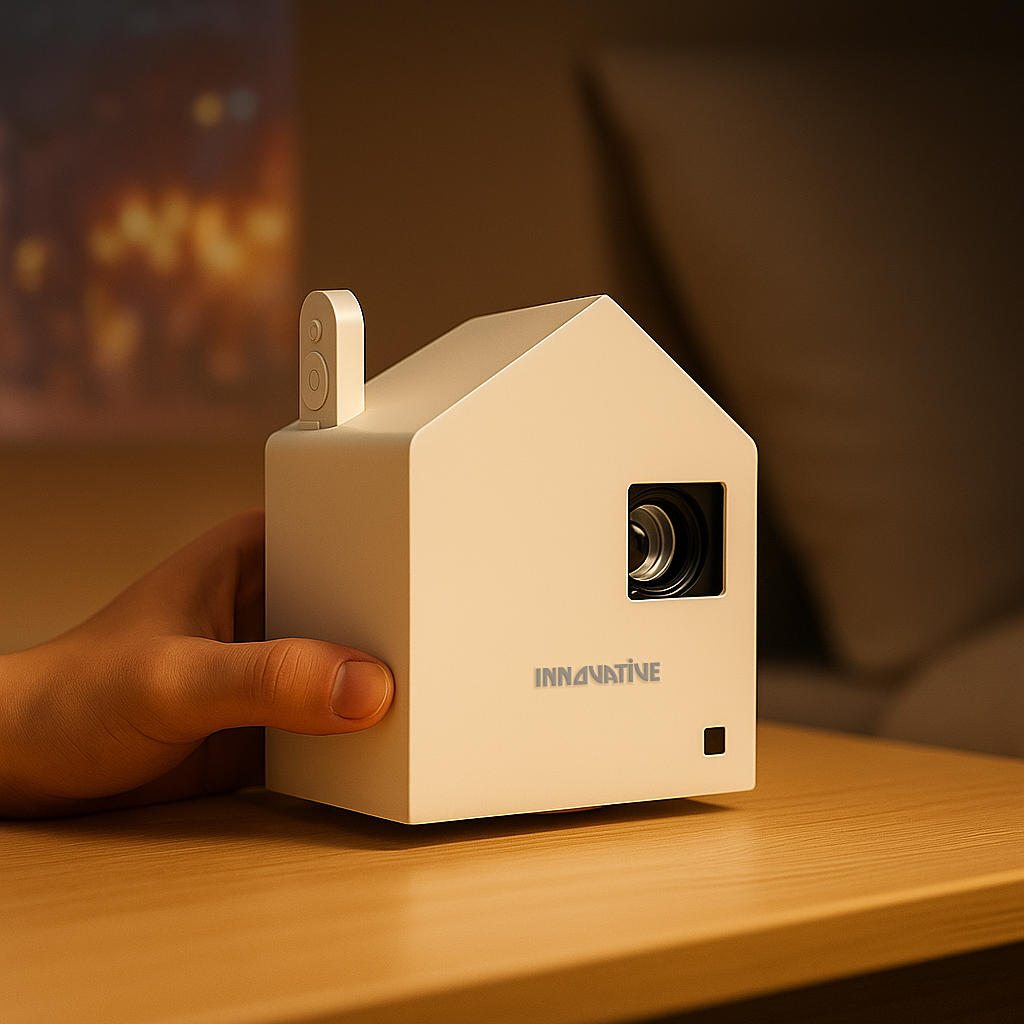

You do not need to become a projector expert to avoid buying the wrong one. You just need a projector buying guide for beginners that filters out the junk specs, the inflated marketing claims, and the cheap models that look fine on a product page but disappoint the minute you turn on a lamp or open a spreadsheet.
That is where most first-time buyers get tripped up. They compare resolution, see a giant lumen number, notice a low price, and assume they are looking at a deal. In real-world use, those three things rarely tell the full story. A projector is only a good buy if it fits your room, your content, and how you actually plan to use it.
A projector buying guide for beginners starts with the room
Before you look at specs, look at the space. A bedroom projector has different priorities than a living room projector, and both are different from what works in an office or classroom.
If you want cozy nighttime streaming in a bedroom or apartment, portability, ease of setup, and decent built-in audio may matter more than chasing maximum brightness. If you want daytime sports in a common room, brightness becomes much more important, and the screen you pair with the projector starts to matter a lot more too. If you need a projector for work, text clarity and reliable connectivity matter more than cinematic black levels.
This is why beginners often overspend on the wrong features or underspend on the ones that actually affect daily use. A projector that sounds impressive on paper can still be a poor fit if your room has ambient light, limited placement options, or a near-wall setup.
Ignore hype specs and focus on what you will actually see
The biggest myth in projector shopping is that the brightest advertised projector wins. It does not.
Many low-cost brands throw around huge lumen claims that do not reflect real viewing performance. The image may still look washed out, colors may be weak, and detail may fall apart once you stop watching in a pitch-black room. Real brightness matters, but so does image quality, color performance, contrast, and how honest the brand is about testing.
A bright projector with poor color can look harsher and less natural than a slightly dimmer one with better image balance. The same goes for resolution. A cheap projector can claim support for 4K content while using a lower native resolution panel. That does not mean you are getting true 4K detail.
Beginners are usually better served by asking simple questions instead of chasing headline numbers. Will this projector still look good with some light in the room? Can I read text clearly? Will skin tones, sports, and movies look natural? Has the product been tested in real viewing conditions, not just in a spec chart?
Choose by use case, not by feature bragging
The fastest way to narrow your options is to decide what kind of projector life you want.
For bedroom movie nights and casual streaming, compact portable projectors make sense. They are easier to move, easier to store, and often better suited to modern apartments where you do not want a permanent install. Battery-capable models can be especially useful if you want flexibility without running cables across the room.
For living room cinema, you usually want more brightness, stronger contrast, and a projector that can hold up on a larger screen. This is where beginners sometimes make the mistake of buying something tiny and convenient, then expecting premium performance at 120 inches in mixed lighting.
For small spaces, near-wall and ultra short throw models can be a smart solution. These let you get a large image without placing the projector far across the room. They are especially useful when furniture layout, kids, pets, or traffic flow make traditional long-throw placement annoying.
For office and presentation use, prioritize text clarity, stable brightness, and simple setup. Movie performance is nice, but if your slides, spreadsheets, and charts are soft, it is the wrong tool for the job.
Brightness matters, but context matters more
Brightness is one of the most misunderstood parts of any projector buying guide for beginners. More brightness is not always better, and less brightness is not always a problem.
If you mostly watch at night with controlled lighting, you may not need a super-bright projector. In fact, too much brightness in a dark room can feel harsh and fatiguing. If you watch during the day, in a family room, or in a meeting room with overhead lights, brightness becomes much more important.
Screen size changes the equation too. A projector that looks great at 80 inches may struggle at 120 inches in the same room. The bigger the image, the more spread out that light becomes. That is why beginners should think in systems, not just projector bodies. The projector, the screen, the room light, and the viewing distance all affect the final result.
Do not treat the screen as an afterthought
A lot of first-time buyers spend all their budget on the projector and then point it at a random wall. Sometimes that works well enough. Often it does not.
A proper screen can improve perceived brightness, image uniformity, and overall polish. In brighter rooms, the right screen can make the difference between a washed-out image and one that actually looks intentional. If you are planning daytime viewing or a premium home setup, pairing the projector with the right screen is not an accessory upgrade. It is part of the performance.
Portable screens make sense if you want flexibility. Fixed or motorized options are better for a more permanent room setup. If ambient light is a real issue, screen choice deserves serious attention.
Placement is where beginner mistakes get expensive
A projector can have great image quality and still be frustrating if it does not fit your space. Throw distance, lens offset, zoom range, and keystone correction all affect how easy the projector is to live with.
Here is the simple version. Some projectors need to sit far back to create a big image. Others can sit much closer. If you have a small room, do not assume every projector can give you 100 inches from a shelf near the bed. Check the actual placement requirements.
Also, do not rely on keystone correction as a magic fix. It is helpful, but heavy digital correction can reduce image quality. A projector that naturally fits your room is better than one that needs a lot of adjustment every time you use it.
If you want a clean installation, think ahead about ceiling mounts, wall trays, power access, and where your streaming source will live. A beginner-friendly setup should feel simple after day one, not like a constant workaround.
Wireless convenience is great, but only when it is reliable
Wireless projection sounds perfect, and sometimes it is. But not all wireless experiences are equal.
If convenience matters to you, look beyond the phrase wireless and ask what that really means in daily use. Does it support the apps or devices you already use? Is screen mirroring stable? Is there a built-in battery if you want true room-to-room portability? Can it run without a mess of adapters?
Modern buyers want less friction, not more. That is especially true for families, apartment dwellers, and professionals who need quick setup. A projector that saves five minutes every time you use it can easily be the better buy, even if another model looks slightly stronger in one isolated spec.
For families and professionals, clarity beats novelty
If kids will be watching, cheap projectors are rarely the bargain they seem to be. Poor image quality often leads people to darken the room more than they want, sit closer than they should, or tolerate a harsh, inconsistent picture because the price was low. A better projector creates a more comfortable viewing experience and usually lasts longer.
For business use, beginners should be even more skeptical of flashy consumer marketing. What matters in a meeting room is whether people can read the text at a glance, whether setup is repeatable, and whether the image holds up with the lights on. A projector that performs well in movies but struggles with documents is not a smart office purchase.
How to narrow it down without getting overwhelmed
If you are stuck between options, make the decision in this order: room type, lighting conditions, screen size, placement limits, and then portability or business needs. That sequence will eliminate most bad fits fast.
Then compare only products that match your real scenario. Do not compare a travel projector to a bright-room living room model as if they are competing for the same job. They are not. The right projector is not the one with the loudest spec sheet. It is the one that fits your space with the fewest compromises.
At INNOVATIVE Projectors, that is the real point of good buying advice. You should not need to decode inflated numbers or guess your way through setup. You should be able to choose based on how you live, what you watch, and what your room will allow.
A first projector should make life easier the moment you turn it on. If a model only looks good in a marketplace listing, keep moving. The right one will still make sense when it is sitting in your room, with your lights, on your wall or screen, doing the job you actually bought it for.